Brown’s Bay is one of those places that feels quiet and remote at first glance, yet plays a surprisingly important role in salmon fishing around northern Vancouver Island. Tucked between Campbell River and the open waters of Johnstone Strait, this sheltered bay has long been used as a transition point for migrating salmon and as a reliable fishing area when weather limits access farther offshore.
For anglers booking a guided trip with Salmon Seekers Fishing, Brown’s Bay is not just a scenic stop. It is a strategic location that Captain Keith uses when conditions, tides, and salmon behaviour align. Understanding why this area matters helps guests appreciate how a well planned charter adapts to real world fishing variables rather than relying on fixed routes.
This guide explains where Brown’s Bay is, why salmon use it, what species are commonly targeted, and how Captain Keith approaches fishing the area safely and effectively.
Book your excursion with Captain Keith today!
Where Brown’s Bay Is Located
Brown’s Bay sits on the east side of northern Vancouver Island, roughly halfway between Campbell River and the entrance to Johnstone Strait. The bay is partially sheltered by surrounding land and islands, which helps break swell and wind coming from the strait. Historically, Brown’s Bay was a small resort and marina area, and while it is quieter today, the geography that made it useful has not changed.
From a fishing perspective, the bay acts as a natural holding and travel zone. Salmon moving north or south often pass through nearby channels, and the combination of current edges, bait presence, and structure makes this area productive at the right times.
Why Brown’s Bay Matters for Salmon Fishing
Brown’s Bay is not always about nonstop action. Its value lies in consistency and adaptability. When offshore waters are rough or visibility is poor, sheltered areas like Brown’s Bay can still fish well. Salmon often pause or adjust their travel routes here depending on tides and water temperature.
Captain Keith treats Brown’s Bay as part of a larger system rather than a single destination. On some days it becomes a primary fishing area. On others, it serves as a productive stop between locations. This flexible approach is one reason guided charters outperform fixed location fishing.
Several factors contribute to the bay’s effectiveness:
- Sheltered water that allows safe trolling during variable weather
- Natural travel corridors for migrating salmon
- Consistent bait activity at certain times of year
- Proximity to deeper channels without full exposure to open water
Salmon Species Commonly Targeted
Brown’s Bay can produce multiple salmon species depending on the season. Captain Keith selects techniques and locations within the bay based on which species are most likely to be present.
Chinook Salmon
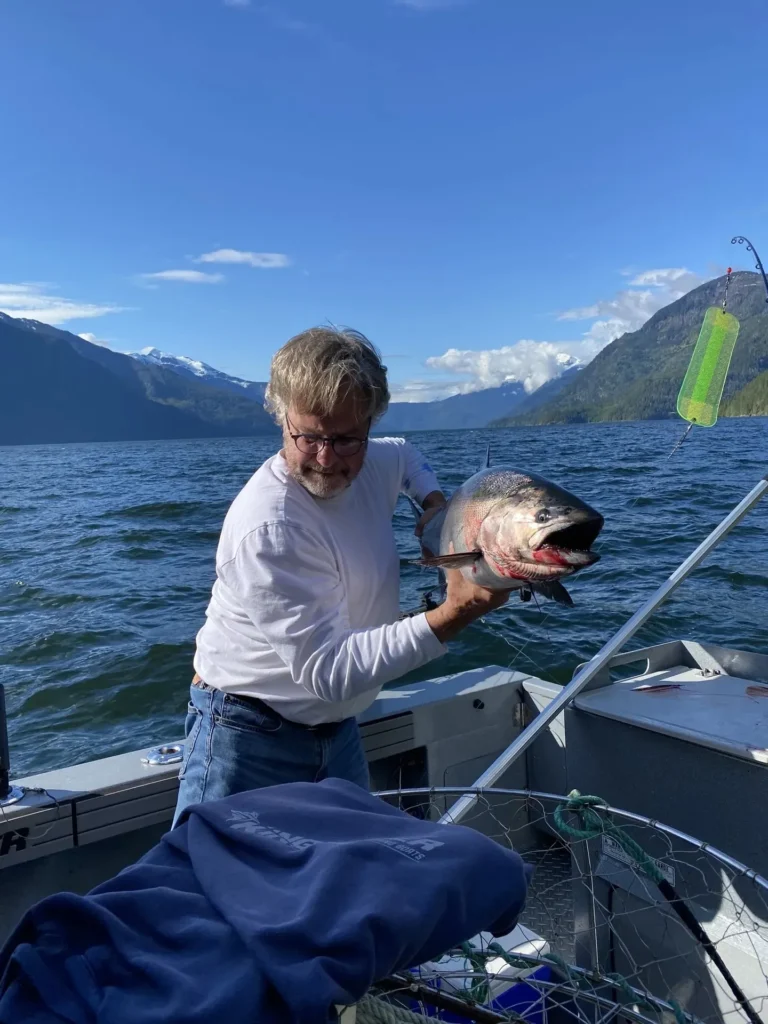
Chinook are a primary target in and around Brown’s Bay. These fish often travel along contour lines and current breaks near the bay and adjacent channels. When conditions align, Chinook can be found feeding or moving steadily through the area.
Chinook fishing here rewards patience and precision. Rather than covering large distances, Captain Keith focuses on depth control, speed, and presentation to stay in the zone where mature fish are travelling.
Coho Salmon
Coho become more common later in the season and are often more aggressive than Chinook. Brown’s Bay can hold coho when bait is present and tidal movement is strong. These fish tend to respond well to changes in speed and lure action.
When coho are around, fishing can become more active, especially during tide changes when fish push through the area.
Pink and Chum Salmon
In strong return years, pink and chum salmon may also pass through or stage near Brown’s Bay. While not always the primary target for charters, their presence can add variety and excitement to a trip, particularly for newer anglers.
Tides, Currents, and Timing
Brown’s Bay fishing success depends heavily on timing. Tidal movement influences where salmon travel and how long they hold in the area. Slack water periods often slow activity, while building or dropping tides can trigger feeding and movement.
Captain Keith plans each trip with tide charts in mind. Rather than fishing randomly, he times passes to coincide with productive windows. This approach maximizes opportunity even during shorter charters.
Seasonal timing also matters. Early season trips may focus more on Chinook holding deeper, while later months bring increased coho activity closer to the surface.
How Captain Keith Fishes Brown’s Bay
Fishing Brown’s Bay effectively requires restraint and local knowledge. It is not an area where constant movement improves results. Captain Keith emphasizes:
- Precise depth control to stay in the salmon travel lane
- Adjusting speed based on tide direction and strength
- Monitoring bait presence and sonar marks
- Making repeat passes through productive zones
This methodical style is especially valuable for guests who want to learn how salmon behavour changes with conditions. Captain Keith explains what he is seeing and why adjustments are made, turning each trip into both a fishing experience and a learning opportunity.
What Guests Can Expect on a Brown’s Bay Charter
Trips that include Brown’s Bay are calm, scenic, and focused. Guests often notice the difference immediately compared to wide open water fishing. The surrounding shoreline provides visual reference points, and wildlife sightings are common.
While no fishing location guarantees limits, Brown’s Bay consistently provides opportunity. Guests benefit from:
- Reduced travel time to fishing grounds
- More time lines in the water
- Comfortable conditions for longer sessions
- Clear explanations of techniques and strategy
Captain Keith adjusts the day based on experience level, weather, and fish activity to ensure the trip remains productive and enjoyable.
Brown’s Bay as Part of a Larger Fishing Plan
It is important to understand that Brown’s Bay is rarely fished in isolation. Captain Keith uses it as part of a broader route that may include nearby channels, points, or deeper water depending on conditions.
This flexibility is a hallmark of Salmon Seekers Fishing. Rather than promising a single spot, Captain Keith focuses on finding fish wherever they are moving that day. Brown’s Bay remains an important option in that decision making process.
Planning Your Trip
If you are curious about Brown’s Bay, the best approach is to trust the plan set by Captain Keith. Conditions change daily, and the value of a guided charter lies in adapting to those changes.
Whether Brown’s Bay becomes the primary focus or a strategic stop, it plays a role in delivering a safe, educational, and rewarding salmon fishing experience.
Book Your Salmon Fishing Charter
Brown’s Bay is just one of many productive areas Captain Keith fishes throughout the season. If you want to experience salmon fishing guided by local knowledge, careful planning, and real time decision making, book your charter with Salmon Seekers Fishing.
Spend your day learning, fishing, and exploring the waters of northern Vancouver Island with Captain Keith at the helm.