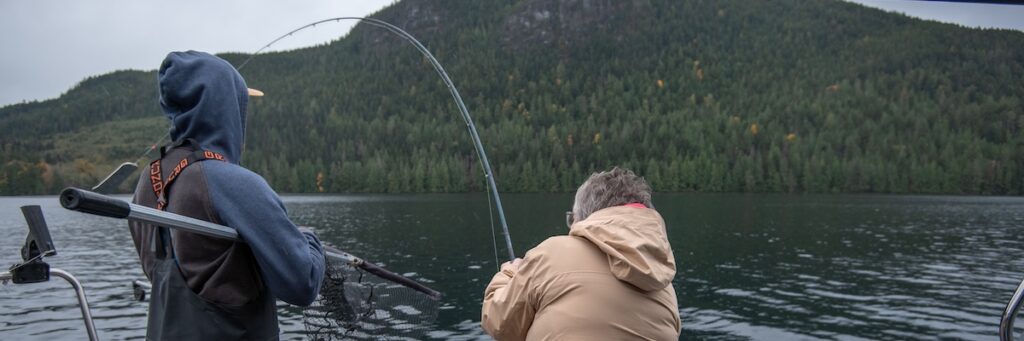
Salmon fishing in strong currents is one of the defining challenges and rewards of fishing on the British Columbia coast. Tides move enormous volumes of water through narrow passages, rips form around points and reefs, and salmon use these forces to travel, feed, and rest. For visiting anglers, understanding how currents work is often the difference between an average day and an exceptional one.
This guide explains how salmon behave in strong currents, why these areas are so productive, and how experienced local knowledge makes a critical difference. Fishing these conditions requires precise boat control, timing, and an understanding of how salmon relate to structure and water movement. This is where time on the water with Captain Keith becomes invaluable.
Book your excursion with Captain Keith today!
Why Salmon Use Strong Currents
Strong currents concentrate food, oxygenate the water, and create natural travel corridors. Salmon are built for moving water, but they do not fight the current constantly. Instead, they use it efficiently.
In fast moving tidal flows, salmon position themselves where effort is minimized and opportunity is maximized. They slide into seams, eddies, and pressure edges where baitfish are swept toward them. These locations allow salmon to hold position while expending less energy, making them predictable when you know what to look for.
On the BC coast, currents are driven primarily by tidal exchanges rather than river discharge. Flood tides and ebb tides each create different holding and travel patterns. Knowing which side of the tide to fish, and where salmon will set up during each phase, is essential.
Understanding Tidal Currents on the BC Coast
Tidal currents are not uniform. They vary dramatically depending on geography, moon phase, and wind. Narrow channels accelerate water movement, while broader areas slow it down. Headlands, reefs, and underwater shelves further shape how currents behave.
Some key factors that influence current strength include tidal range, channel width, bottom contour, and time relative to slack water. A large tidal exchange can produce powerful currents that move bait and salmon quickly. Smaller exchanges may create subtle movement that still triggers feeding but requires more precision to locate fish.
Captain Keith plans trips around these variables rather than fighting them. Fishing is scheduled to take advantage of predictable current windows when salmon are most active and accessible.
Where Salmon Hold in Strong Currents
Salmon rarely sit in the fastest part of the flow. Instead, they use current breaks created by natural features. These areas act like underwater rest stops and ambush points.
Common holding areas include:
- Current seams where fast and slow water meet
- Lee sides of points and islands
- Eddies behind reefs or submerged structure
- Pressure edges along underwater shelves
Each of these locations offers salmon relief from the full force of the current while still delivering food. These spots are often small and easy to miss without local experience. Precise positioning of the boat and gear is critical.
Boat Control Matters More Than Gear
In strong currents, boat control becomes the foundation of success. Drifting too quickly or too slowly can pull lures out of the strike zone in seconds. Holding the correct angle relative to the current keeps presentations working naturally.
Captain Keith uses tide direction, engine control, and drift management to maintain consistent lure action. Small adjustments in speed or heading can dramatically change results. This level of control is difficult to replicate without experience in these exact waters.
The covered cabin and stable platform on the Salmon Seekers boat allow fishing to continue comfortably even when conditions are challenging. This makes it possible to focus on technique rather than simply staying positioned.
Trolling Techniques for Strong Currents
Trolling remains one of the most effective ways to fish strong currents when done correctly. The key is matching speed and depth to the flow rather than relying on fixed settings.
Important considerations include lure action, depth control, and angle of presentation. Currents can lift or drop gear unexpectedly, so constant monitoring is required.
Captain Keith adjusts trolling speed based on tide phase, not just GPS speed. The goal is to maintain consistent lure action relative to the water, not the shoreline. This subtle difference is often overlooked by visiting anglers.
Gear Selection in Heavy Flow
Strong currents place extra demands on fishing gear. Rods, reels, and terminal tackle must handle increased drag while maintaining sensitivity.
Heavier downrigger weights are often required to keep gear tracking properly. Line angles are closely watched to ensure lures stay within the productive zone. Leader length and lure choice are adjusted to compensate for turbulence and water clarity.
Captain Keith selects gear based on conditions rather than habit. This flexibility helps maintain effective presentations throughout changing tides.
Timing Is Everything
Fishing strong currents is as much about timing as technique. Salmon activity often peaks during specific windows around tide changes.
Many productive bites occur as currents begin to slow or accelerate rather than at maximum flow. These transition periods allow salmon to reposition and feed more aggressively. Missing these windows can mean long quiet stretches.
Trip planning with Captain Keith centers on these timing patterns. Launch times, locations, and daily plans are adjusted to align with the best opportunities rather than forcing a fixed schedule.
Safety in Strong Currents
Strong currents demand respect. Rapid water movement, combined with changing weather, can create challenging conditions quickly.
Key safety considerations include situational awareness, proper vessel handling, and local knowledge of hazards. Floating debris, submerged structure, and wind against tide conditions all increase risk.
Fishing with Captain Keith provides peace of mind. Experience in these waters ensures decisions are made conservatively and confidently, allowing guests to focus on the fishing experience.
Why Local Experience Makes the Difference
Strong current fisheries reward precision and punish guesswork. Reading water correctly, adjusting continuously, and anticipating changes are skills built over years on the same tides.
Captain Keith understands how salmon use current on this coastline throughout the season. This knowledge cannot be learned quickly or replicated with charts alone. It comes from time on the water, observation, and refinement.
For visitors, this experience turns challenging conditions into productive and memorable days.
Book a Charter Fishing Trip
Salmon fishing in strong currents is not about fighting the water. It is about working with it. When done right, these areas produce powerful strikes and unforgettable battles.
If you want to experience salmon fishing at its most dynamic and rewarding, book a charter fishing trip with Captain Keith and Salmon Seekers Fishing today.